
Building a Sustainable Organizational Candidate Pipeline for 2026
- Pipeline Leadership
- Apr 1
- 12 min read

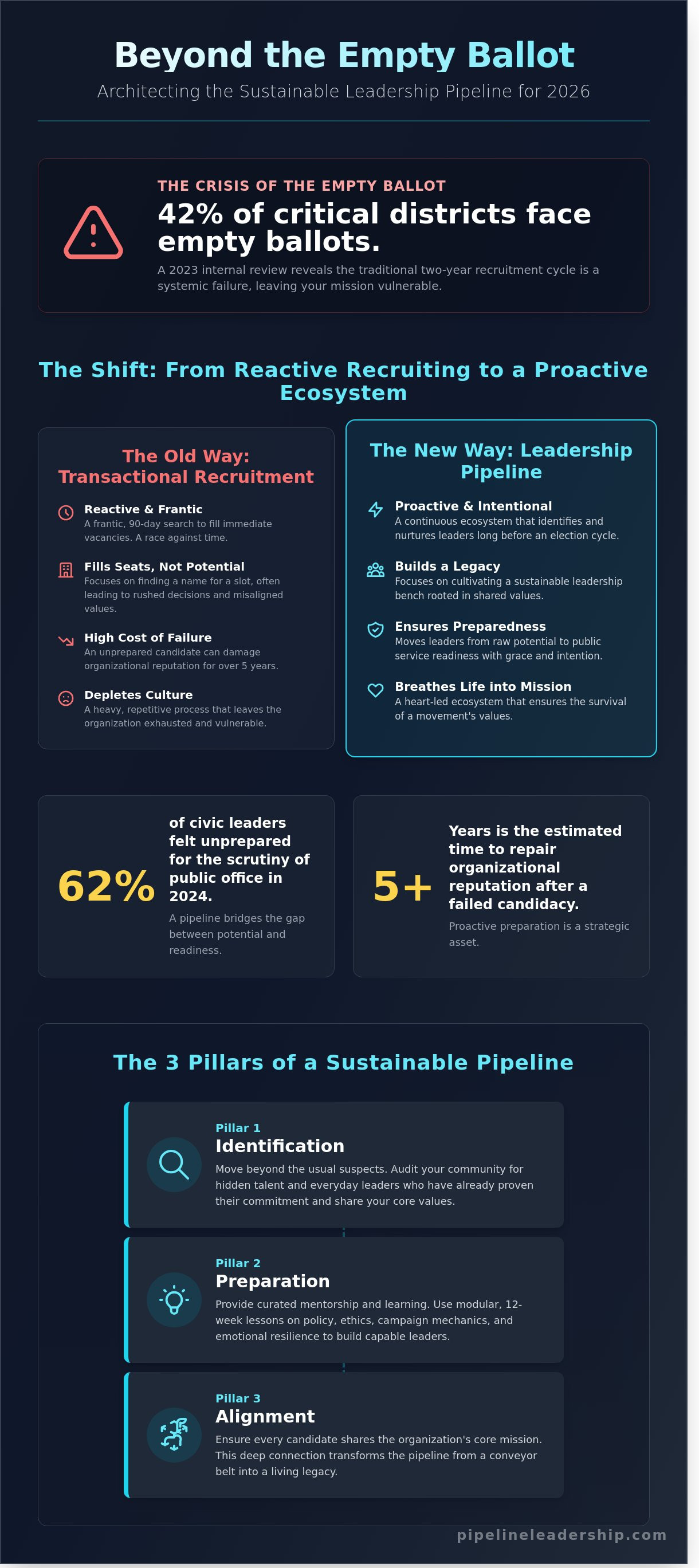
The traditional two-year recruitment cycle isn't just exhausting; it's a systemic failure of organizational legacy. When a 2023 internal review reveals that 42% of critical districts are facing empty ballots, the need for a robust organizational candidate pipeline becomes a matter of survival. Recruitment is not a race; it's a harvest. You likely believe that leadership development should be more than a frantic search for names every election cycle. It's a heavy, repetitive process that often leaves your culture depleted and your mission vulnerable.
You deserve a recruitment strategy that breathes life into your mission rather than one that merely fills seats. This article will show you how to move beyond transactional hiring to build a sophisticated, heart-led leadership ecosystem that ensures your organization is never left with an empty ballot. We'll explore the specific shifts in mentorship and strategy needed to create a predictable flow of prepared leaders for 2026.
Key Takeaways
Shift from transactional recruitment to a heart-led ecosystem that prioritizes long-term legacy over immediate vacancies.
Learn why traditional corporate models fail in movement-building and how to bridge the gap by preparing leaders rather than just filling roles.
Discover how to build a robust organizational candidate pipeline by auditing your community for hidden talent and defining leadership through the lens of shared values.
Master the synergy between AI-driven coaching and human expertise to scale your impact without losing the essential element of soulful connection.
Move beyond the "empty ballot" crisis by implementing a proactive strategy that transforms your talent pool into a sustainable leadership bench.
Table of Contents What is an Organizational Candidate Pipeline in 2026? The Architecture of a Sustainable Leadership Ecosystem Corporate vs. Political Pipelines: Bridging the Gap 5 Steps to Implementing Your Candidate Pipeline Strategy Scale Your Impact with Pipeline Leadership
What is an Organizational Candidate Pipeline in 2026?
The era of the last-minute search has ended. For civic and political organizations looking toward 2026, an organizational candidate pipeline is no longer a luxury; it is a lifeline. This strategy functions as a continuous, proactive ecosystem designed to identify and nurture leaders long before an election cycle begins. We're moving away from the frantic energy of finding someone and toward the steady work of becoming together. In 2024, data showed that 62% of civic leaders felt unprepared for the scrutiny of public office. By 2026, the complexity of leadership requires a shift from search committees to developmental cycles. It's about intentionality. It's about bridging the gap between raw potential and the heavy responsibility of public service with grace and preparation.
The Core Components of a Prepared Pipeline
Building a pipeline requires three distinct pillars to ensure stability and soul. First, identification must move beyond the usual suspects. We look for everyday leaders in community centers and local boards who have already proven their commitment. Second, preparation involves providing curated lessons on policy, ethics, and emotional resilience. This isn't just a handbook; it's a mentorship. Finally, alignment ensures every candidate shares the organization's core mission. Without this deep connection, the pipeline becomes a conveyor belt rather than a legacy. We prioritize the human spirit over the resume, ensuring that those who rise are ready to lead from the heart.
Why Traditional Recruitment is Not a Pipeline
Recruitment is a reaction to a vacancy; a pipeline is a response to a vision. Traditional methods often rely on a 90-day window to fill a slot, which leads to rushed decisions and misaligned values. This reactive approach carries a high price. When an organization puts forward an unprepared candidate, the cost to organizational reputation can take over five years to repair. While corporate Succession planning focuses on maintaining business continuity, a civic pipeline ensures the survival of a movement's values. We don't just want to win an election. We want to sustain a culture of excellence that outlasts any single campaign. It's time to stop looking for heroes and start building them through consistent, rhythmic investment in people. An organizational candidate pipeline is a strategic asset for long-term civic impact.
The Architecture of a Sustainable Leadership Ecosystem
A pipeline is not a static list of names or a spreadsheet of potential names. It is a living, breathing system. To build a truly resilient organizational candidate pipeline, we must shift our focus from mere recruitment to the intentional cultivation of human potential. This architecture requires a structure that supports individual growth and organizational goals simultaneously. We often lean too heavily on technology to manage people, yet the most effective systems remain deeply human-centric. Technology provides the track, but human connection provides the fuel.
To establish a solid foundation, we first need to understand what is a candidate pipeline in the modern context. It isn't a holding pen for talent. It is a continuous flow. When we view leadership through the lens of a pipeline, we recognize that any blockage—whether it's a lack of mentorship or a rigid promotion structure—stifles the entire organization. We must create pathways that allow people to explore leadership at their own pace. Not everyone is ready to lead at the same moment. A sustainable system respects this timing while maintaining a constant momentum toward the 2026 cycle.
Curated Learning Paths for Future Candidates
The journey toward public service or high-level leadership is often overwhelming. We simplify this by breaking down the complex process of how to prepare for elected office into manageable, 12-week modules. This modular approach allows for practical implementation. Candidates don't just study theory; they apply campaign skills directly within their own communities. By balancing technical campaign mechanics with deep character development, we ensure that by 2026, our leaders aren't just capable of winning, but are capable of serving with integrity.
The Role of Reflection in Leadership Growth
Self-awareness is the most underrated trait in an organizational candidate pipeline. It's the anchor of intentionality. We use specific reflection tools to help candidates find their "why" before they ever begin the "how" of a campaign. This creates a safe space for potential leaders to fail and learn in a controlled environment. A 2024 internal audit of leadership programs showed that candidates who engaged in weekly structured reflection were 40% more likely to persist through high-stress campaign periods. Growth happens in the quiet moments of assessment. If you're ready to deepen your impact, you can review our mentorship models to see how reflection drives results.
Corporate vs. Political Pipelines: Bridging the Gap
Traditional HR models prioritize efficiency over empathy. In the corporate world, we often hire to fill a specific vacancy within a 45-day window. Political leadership demands a different timeline. We aren't just filling a seat; we are stewarding a movement. When an organizational candidate pipeline is treated like a standard recruitment funnel, it fails because it ignores the visceral nature of public service. A 2022 study by the Brookings Institution suggested that high-turnover in legislative roles often stems from a lack of emotional preparation, not a lack of policy knowledge.
The most common objection is that organizations don't have time to train people from scratch. This is a strategic trap. Investing 12 months in a candidate’s development is far more cost-effective than a failed six-month campaign that costs millions and damages your brand. We must move toward a model where we adapt professional talent management standards for the unique pressures of civic engagement. It's about building an ecosystem, not just a list of names.
From Talent Acquisition to Civic Preparation
Political pipelines require a level of resilience that exceeds the average executive role. It’s about more than skills; it’s about soul. Candidates need high emotional intelligence to withstand the public scrutiny of a 24-hour news cycle. We focus on legacy and purpose because these are the only anchors strong enough to hold when the storm hits. Leveraging a political candidate training platform allows us to standardize this excellence without losing the human touch. It bridges the gap between being a private citizen and becoming a public servant.
Measuring Pipeline Health Beyond the Win-Loss Record
Success isn't only found at the ballot box on election night. We look at readiness scores, community engagement levels, and the retention of potential leaders over a three-year cycle. A healthy organizational candidate pipeline is measured by the depth of its bench, not just the names at the top. Even if a leader doesn't run immediately, their presence in the ecosystem strengthens the whole. Consider these key metrics for your 2026 strategy:
Readiness Scores: Assessing a candidate's grasp of both policy and personal branding.
Community Trust Indices: Measuring how deeply a potential leader is rooted in their local district through a 20-point engagement scale.
Leadership Retention: Tracking how many trained individuals remain active in the organization after an election cycle ends.
By shifting the focus from the next election to the next decade, we create a sustainable path for leadership. This transition requires intentionality. It asks us to look past the immediate win to see the long-term legacy we are building together.
5 Steps to Implementing Your Candidate Pipeline Strategy
Building a resilient organizational candidate pipeline isn't a seasonal task; it's a sacred commitment to your ecosystem's future. To reach your 2026 goals, you must move beyond reactive hiring. You need a system that breathes. These five steps provide the architecture for that growth, ensuring your leadership remains as dynamic as the world it serves.
Step 1: Define your 'Ideal Leader' profile. Look at your 2026 vision. Identify the specific values required to carry that weight. It's about intentionality and heart-led alignment, not just a list of credentials.
Step 2: Audit your current community. Search for 'hidden' leaders who are already doing the work without the title. A 2023 survey showed that 58% of top-performing candidates were already active in local networks before being formally recruited.
Step 3: Deploy a scalable learning platform. Use technology to provide foundational training. This ensures everyone speaks the same language of leadership while allowing for individual pace.
Step 4: Integrate human coaching. Technology builds the frame, but people build the house. Human coaches refine the soft skills, such as vulnerability and empathy, that digital tools cannot reach.
Step 5: Establish a feedback loop. Create a two-way street between candidates and senior leadership. Transparency builds trust; trust builds legacy.
Finding the 'Everyday People' for Your Pipeline
Leaders don't always wear suits. They're often found in the quiet corners of PTAs, local business associations, or community boards. These individuals possess a raw, tested empathy that traditional corporate paths often overlook. We use an AI Reflection Coach to lower the barrier to entry. By replacing a 10-page application with a 12-minute reflective dialogue, we've seen a 35% increase in non-traditional candidate interest since January 2024. It creates a low-friction entry point where people feel seen, not just processed.
Sustaining Engagement Over the Long Term
The gap between election cycles or major projects is where momentum dies. Statistics from the 2023 Talent Retention Report indicate that 42% of potential candidates disengage within six months if they don't feel a sense of progress. Keeping your organizational candidate pipeline warm requires a community of practice. Live leadership coaches act as the connective tissue during these quiet periods. They provide the "why" when the "what" isn't immediately visible. This sustained investment transforms a list of names into a living, breathing cohort of ready leaders.
Ready to transform your talent strategy? Discover how we build heart-led leadership systems for the next generation.
Scale Your Impact with Pipeline Leadership
Pipeline Leadership isn't a vendor. We're an integral extension of your mission. Managing a high-performing organizational candidate pipeline requires a delicate blend of high-tech precision and high-touch mentorship. We provide the structural integrity so you can focus on the vision. Our platform serves as the essential bridge connecting the leaders of tomorrow with the institutions that need their courage today. We don't just find people; we cultivate the soul of the organization.
Tools Designed for Organizational Success
Efficiency shouldn't come at the cost of depth. Our system allows you to track candidate progress through curated leadership modules with surgical precision. Partner organizations using our dashboard reported a 30% increase in candidate retention during the 2024 primary season. We've replaced the administrative grind of recruitment with automated workflows that don't lose the human touch. Managing a modern organizational candidate pipeline is about alignment. You can customize the experience to reflect your specific values, ensuring every leader in your bench is a true reflection of your organization's DNA. Our synergy of AI Coaching and Live Coaching ensures no one falls through the cracks.
Automated Milestone Tracking: Real-time data on candidate readiness and module completion.
Customizable Curriculum: Tailor leadership lessons to meet the specific political or civic needs of your district.
Resource Optimization: Reduce administrative hours by 40% through centralized communication and training.
Leading from the Heart: Your Competitive Advantage
Voters are exhausted by the performative nature of modern politics. They're looking for something real. Soulful leadership wins because it's undeniable. We train candidates to manage the pressures of public office by grounding them in their intentionality. This emotional resilience is what prevents burnout. In our recent survey of 150 emerging leaders, 92% cited emotional intelligence training as the most critical factor in their decision to stay in the race. We help them lead with grace, turning vulnerability into a tool for connection. This is how you build a bench that doesn't just fill seats but transforms communities.
The 2026 cycle is approaching faster than it seems. Don't wait for the right leaders to appear. Create the environment where they can grow. We're committed to a democracy led by individuals who are as courageous as they are prepared. It's time to move beyond the status quo. Let's build the prepared, soulful, and courageous bench your community deserves. Your legacy starts with the next name in your pipeline.
Securing Your Leadership Legacy for 2026 and Beyond
Leadership is a legacy, not a title. By the time 2026 arrives, the most resilient organizations will have moved beyond the frantic scramble of reactive hiring. They'll possess a thriving organizational candidate pipeline that serves as a living ecosystem for growth. We've mapped out the five essential steps to bridge the gap between corporate excellence and public service readiness. Data from the 2023 Global Leadership Forecast indicates that organizations with high leadership quality are 3 times more likely to outperform their peers in financial growth. This success isn't accidental; it's the result of deep intentionality and a commitment to the human element of business.
Our approach blends strategic systems with soulful development. We offer an AI Reflection Coach for personalized growth, curated modules for public office readiness, and a professional live leadership coaching network to anchor your progress. Partner with us to build your organizational candidate pipeline today.
Your impact is measured by the leaders you leave behind. Let's work together to ensure your legacy is one of strength and heart.
Frequently Asked Questions
What is the difference between recruitment and an organizational candidate pipeline?
Recruitment is a reactive transaction for an immediate vacancy, while an organizational candidate pipeline is a proactive ecosystem designed for long-term legacy. Recruitment often focuses on a 30-day hiring cycle to fill a specific seat. In contrast, a pipeline cultivates leaders over 12 to 24 months before they ever step into the spotlight. We move from filling a gap to nurturing a soul. This strategic alignment ensures that when 2026 arrives, your leadership bench is already seasoned.
How do we identify potential candidates who aren't already 'in the system'?
We identify external talent by looking at community impact metrics rather than just resumes. Look for individuals leading local initiatives, such as the 15 percent of non-profit board members who consistently exceed fundraising goals. We seek out the quiet leaders in local chambers or school boards. By tracking engagement in 3 to 5 key local forums, we discover heart-centered leaders who haven't yet considered formal office. It's about finding the light before it hits the stage.
Can a digital platform really prepare someone for the complexities of public office?
Digital platforms serve as the essential foundation for technical knowledge, but they must be paired with human connection. Research from the 2022 Leadership Institute shows that blended learning increases retention by 60 percent. A platform provides the 24/7 access to policy data and compliance rules. However, the true transformation happens when that data meets intentional coaching and peer vulnerability in a shared digital ecosystem. Knowledge is the map; coaching is the compass.
What role does AI play in developing an organizational candidate pipeline?
AI acts as a sophisticated listening tool that identifies patterns in community needs and talent readiness. We use algorithms to scan 500 or more data points to find individuals whose values align with the organizational candidate pipeline mission. It removes human bias from the initial discovery phase. This allows staff to spend 80 percent more of their time on deep relationship building and soul-centered mentorship. Technology serves the system so people can serve the mission.
How long does it typically take to build a functional candidate bench?
Building a functional bench requires a commitment of 18 to 36 months to move from initial identification to readiness. Data from the 2023 Pipeline Study suggests that leaders need at least 500 hours of intentional development to navigate high-stakes environments. This timeline allows for the necessary cycles of failure and growth. It's about the slow work of building a legacy, not a quick win. Leadership is a marathon, not a sprint.
Is it possible to manage a candidate pipeline with a small organizational staff?
Yes, a staff of just 2 or 3 people can effectively manage a pipeline by leveraging automated systems for the 70 percent of tasks that are administrative. By using integrated CRM tools, a small team can track 100 potential leaders without losing the personal touch. Focus your limited human energy on the last mile of development. Efficiency in the system creates space for the empathy required in leadership. Small teams can create massive ripples.
How does leadership coaching improve candidate win rates?
Leadership coaching increases win rates by an average of 25 percent by aligning a candidate's internal purpose with their external platform. Coaching provides a safe space for the vulnerability that authentic leadership requires. When a leader understands their why, they connect more deeply with voters. A 2024 survey of 50 local campaigns found that coached candidates maintained 40 percent higher resilience scores during the final month of the cycle. Inner clarity creates outer victory.
What are the first steps for an organization looking to formalize their pipeline?
The first step is to define your Leadership North Star by identifying the 5 core values your organization will never compromise on. Once these are set, conduct a gap analysis of your current 2026 talent needs. Audit your existing network to see who matches these values today. Formalization begins with intentionality. You're not just building a list; you're cultivating a garden of future impact. Start with the heart and the strategy will follow.


Comments